


Women have the healthiest eggs when they are between the ages of 25 and 30 years old. Post 30, the quality of the eggs starts declining. However, with egg freezing as an option, you can prioritize other goals before taking the responsibility of parenthood.
Many women are choosing egg freezing not only because of medical conditions but also as a way of balancing personal, professional, and family goals. Urban clinics are now witnessing 500–800 egg freezing inquiries per month.
In this article, you will understand what the procedure involves, who should consider it, the step-by-step process, and the success factors that play a role. With this article, you can check if egg freezing is the right choice for your circumstances.
What Is Egg Freezing and Why Do Women Choose It?
The egg freezing process is a fertility preservation method where eggs are retrieved from ovaries, frozen, and stored for future use. Technically, it is known as oocyte cryopreservation. The idea is to secure healthy eggs when fertility potential is higher, so they can be used later when natural conception becomes difficult.
Many women choose egg freezing for personal reasons. Some delay having children to focus on their career, education, or financial stability. Others may not have found the right partner yet, but want to keep the option of having biological children open. In recent years, awareness around fertility preservation has grown. Egg freezing is no longer seen only as a medical necessity but also as a proactive step in reproductive planning.
Who Should Consider Egg Freezing?
Age and Fertility Preservation
Age plays the most critical role. Female fertility declines with time because both the number and quality of eggs decrease. The egg freezing age limit is not fixed medically, but success is much higher when the procedure is done before the age of 35. Women in their late 20s or early 30s get the most benefit because their eggs are still of good quality.
Younger women also consider egg freezing if they have decided to delay pregnancy beyond their peak fertile years. Doctors often recommend not to wait until the late 30s because by then the ovarian reserve is already much lower.
Medical and Lifestyle Reasons
Some women face health conditions that directly affect fertility, like endometriosis, premature ovarian insufficiency, or PCOD. Cancer patients who need chemotherapy or radiation are also advised to consider freezing eggs before treatment, as such therapies can damage ovarian function.
Lifestyle circumstances also play a crucial role. For example, women working in high-stress jobs, military service, or those who frequently travel may want the reassurance of stored eggs. In simple terms, egg freezing allows you to buy time while reducing the uncertainty that biology often brings.
Step-by-Step Egg Freezing Process
Initial Consultation and Ovarian Reserve Testing
The first step in the egg freezing process is to get your medical history checked. Common tests include blood work for hormones such as AMH (Anti-Müllerian Hormone) to check your ovarian reserve and an ultrasound to measure antral follicle count. These results help estimate how well your ovaries respond to stimulation.
Hormonal Stimulation and Monitoring
After the initial tests, you begin with a course of hormonal injections. These medicines stimulate the ovaries to produce multiple eggs instead of the single egg that develops naturally each month. Regular ultrasound scans and blood tests are done to monitor follicle growth and ensure the ovaries are responding as expected. This phase usually takes 10–12 days.
Egg Retrieval Procedure
When the follicles reach the right size, a trigger injection is given. Egg retrieval is done 34–36 hours later. The procedure is short, and the patient is sedated. With the help of a thin needle and ultrasound, the eggs are collected. Most women go home the same day, and recovery is quick.
Freezing Technique (Vitrification)
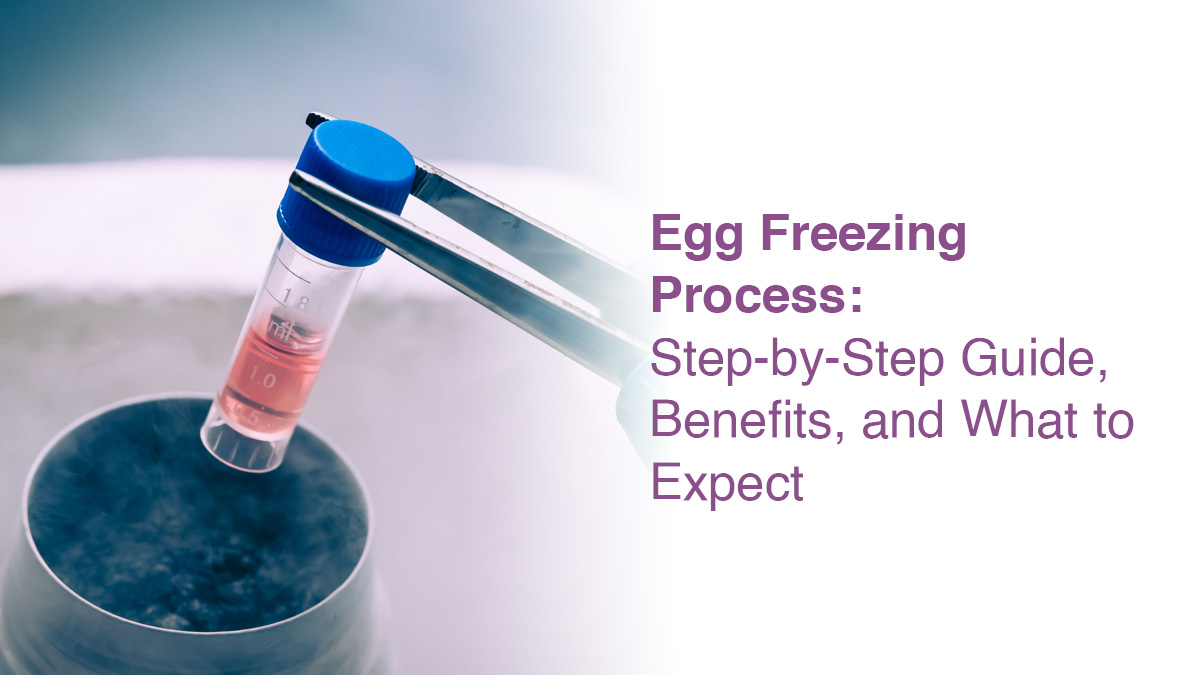
After retrieval, mature eggs are carefully frozen using a method called vitrification. This technique prevents ice crystals from forming, which could damage the cell structure. The eggs are then stored in liquid nitrogen tanks at very low temperatures until needed.
Risks and Side Effects of Egg Freezing
Medication Reactions
Hormonal injections cause temporary side effects such as mood swings, bloating, or mild discomfort. In rare cases, women can develop ovarian hyperstimulation syndrome (OHSS), where the ovaries become swollen and painful. With proper monitoring, the risks can be managed.
Procedure-Related Risks
The retrieval procedure is safe, but it carries minimal risks of bleeding or infection. Such complications are uncommon and managed effectively with timely medical care. Most women experience only mild cramping or spotting for a day or two.
Success Rates and Factors That Influence Them
Age at the Time of Freezing
The younger you are at the time of egg freezing, the better the chances later. Eggs frozen before 35 are more likely to lead to a healthy pregnancy compared to eggs frozen at 38 or 40. The egg freezing age limit can extend technically into the early 40s, but results decline sharply after mid-30s.
Number of Eggs Retrieved
Success also depends on how many eggs are collected and stored. A higher number improves the probability of having viable embryos during IVF later. Doctors usually recommend retrieving 15–20 mature eggs for a reasonable chance of pregnancy.
It is important to remember that freezing eggs does not guarantee pregnancy, but it increases the chances compared to trying naturally at an older age.
Conclusion
Awareness around egg freezing is still very limited in India. However, it is a viable alternative for women to preserve fertility and make choices on their own timeline. While it is not free from risks or limitations, it is a valuable option for those who want to safeguard their reproductive future. Know more about egg freezing cost in India here (Article Link).
At Oasis Fertility, we offer advanced fertility preservation techniques, guided by experienced specialists. To learn more or book a consultation, call our toll-free number 1800-3001-1000 or use the live chat option.
FAQs
1. How long can frozen eggs be stored and still be viable?
Frozen eggs can stay viable for many years, even over a decade, if stored under proper conditions using vitrification.
2. What is the best age to freeze eggs for higher success rates?
The best age is usually before 35, when egg quality and quantity are still optimal. Success rates decrease as the egg freezing age limit increases.
3. Is the egg freezing procedure painful or risky?
Most women experience only mild discomfort during stimulation and brief cramping after retrieval. Serious risks are very rare.