


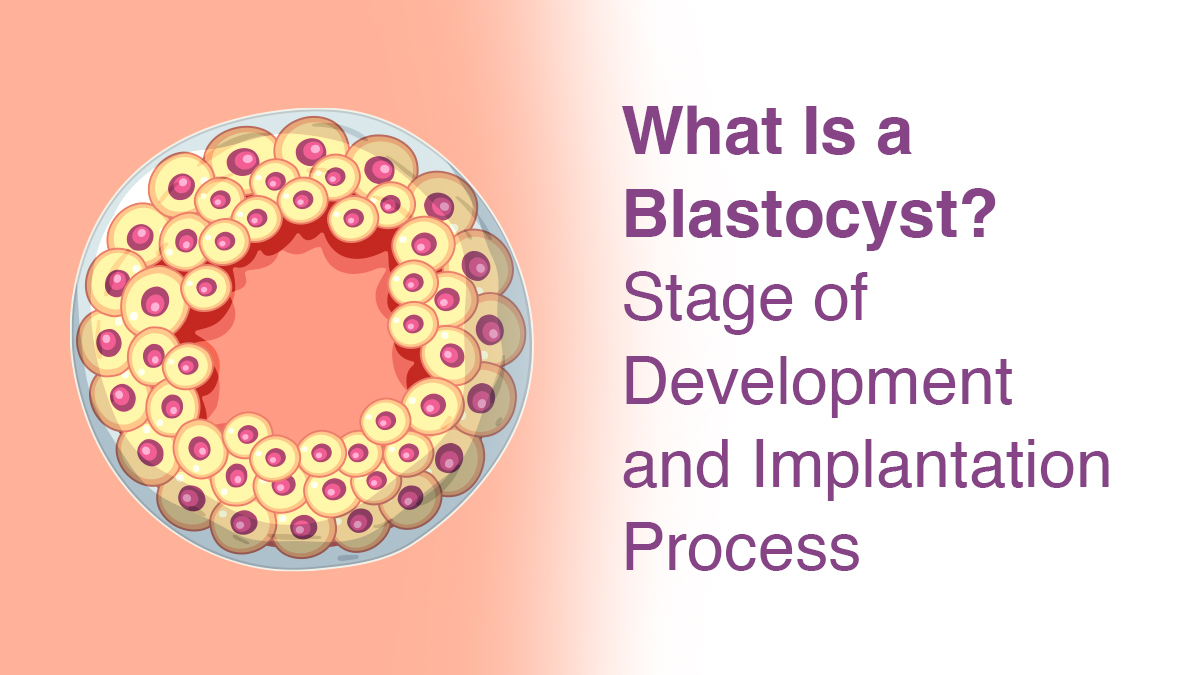
When couples begin their fertility journey, they often hear medical terms that can feel confusing at first. One such term is blastocyst. Understanding what a blastocyst is and why it matters can make the process of conception, whether natural or through IVF, much easier to grasp. In simple terms, a blastocyst is a very early stage of human development that plays a critical role in implantation and pregnancy.
What Is a Blastocyst?
A blastocyst is an embryo that has developed for about five to six days after fertilisation. At this stage, the fertilised egg has divided multiple times and formed a structure that is ready to attach itself to the uterus. This stage is important because implantation usually happens only after the embryo becomes a blastocyst.
How an Embryo Develops From Fertilization to Blastocyst
After fertilisation, the egg becomes a single cell called a zygote.
- Day 1–2: The zygote starts dividing into two, four, and then eight cells.
- Day 3: It becomes a morula, a solid ball of cells.
- Day 5–6: Fluid enters the embryo, forming a hollow structure known as a blastocyst.
By this time, the embryo has the ability to implant in the uterus.
Structure of a Blastocyst and Its Role in Pregnancy
A blastocyst has three main parts:
- Inner cell mass: This develops into the baby.
- Trophectoderm: This forms the placenta.
- Fluid-filled cavity: Helps the cells organise and grow.
This structure allows the blastocyst to attach to the uterine lining and support early pregnancy.
Day 5 vs Day 6 Blastocyst: What the Difference Means?
Some embryos reach the blastocyst stage after 5 days, while some can take up to 6 days.
- Day 5 blastocysts are often considered slightly stronger.
- Day 6 blastocysts can also lead to healthy pregnancies.
The difference mainly reflects how quickly the embryo develops, not its ultimate potential.
How Blastocysts Are Assessed in IVF?
In IVF, doctors examine each blastocyst under a microscope and grade it based on:
- Expansion of the cavity
- Quality of inner cell mass
- Quality of trophectoderm
Grading helps doctors choose the best blastocyst for transfer, but even lower-graded ones can sometimes result in pregnancy.
Blastocyst Development in Natural Pregnancy vs IVF
In a natural pregnancy, the sperm and egg meet inside the fallopian tube, after 5-6 days blastocyst is formed, and travels to the uterus. In IVF, fertilisation and early development happen in the lab, and the blastocyst is later transferred into the uterus. The biological process remains the same; only the environment differs.
Fresh vs Frozen Blastocyst Transfer
- Fresh transfer: The blastocyst is transferred in the same cycle in which it is created.
- Frozen transfer: The blastocyst is frozen and transferred later.
Both methods are widely used, and success depends on individual health factors and uterine readiness.
What Is Blastocyst Implantation?
Implantation is when the blastocyst attaches itself to the lining of the uterus. This marks the beginning of pregnancy. Once implanted, the blastocyst starts producing hormones that support pregnancy.
When and How Implantation Occurs
Implantation usually occurs 6–10 days after fertilisation. The blastocyst first makes contact with the uterine wall, then attaches firmly, and finally embeds itself into the lining.
Factors That Influence Implantation Success
Several factors affect whether a blastocyst implants successfully:
- Thickness and health of the uterine lining
- Quality of the blastocyst
- Overall maternal health
What Happens If Implantation Does Not Occur?
If implantation does not happen, the blastocyst naturally breaks down and is absorbed by the body. This can occur without any noticeable symptoms and is more common than many people realise.
When to Consult a Fertility Specialist
If you have been trying to conceive for over a year (or six months if you are over 35), consulting a fertility specialist can help identify issues related to blastocyst development or implantation. Book a free consultation with us to resolve your doubts at the earliest.
Why the Blastocyst Stage Is Crucial for Pregnancy
The blastocyst stage is crucial because it is the point at which the embryo becomes capable of implantation. Without reaching this stage, pregnancy cannot begin.
Key Takeaways
Understanding the blastocyst stage can help couples feel more informed and confident during their fertility journey. At Oasis Fertility, experienced specialists guide you at every step with personalised care and advanced fertility treatments. For support or consultation, you can call their toll-free number 1800-3001-1000 and take the next step towards parenthood with confidence.