


IVF (In Vitro Fertilisation) Treatment: Cost, Process & Success Rate
- How it Works
- Suitable For
- Process
- Cost
- Results
- Success Rate
- FAQs
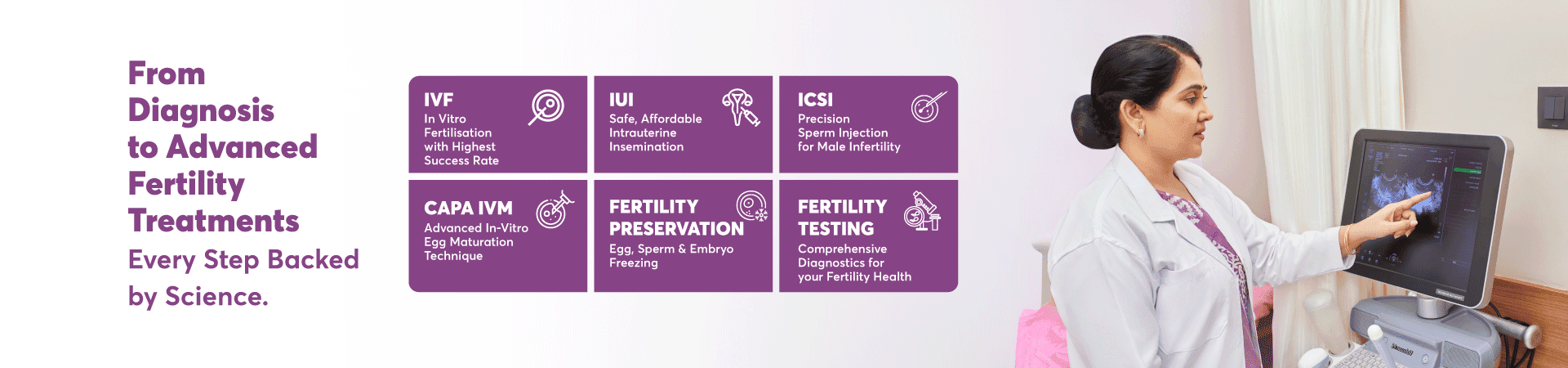
Modern science, technological advancements, and medical advancements have solved many challenges, including infertility. Today, IVF or in vitro fertilisation treatment, is one of the most successful fertility treatments, offering hope to couples who wish to become parents but are suffering from known or unexplained fertility challenges. It involves a series of steps to achieve pregnancy, starting with preparing the woman’s body for treatment, retrieving eggs, fertilising them outside the body, and then transferring the ready embryos into the uterus. At Oasis Fertility, we combine state-of-the-art technology with compassionate care to maximise your chances of success and support you through every step of your fertility journey.
First time IVF success
Why Choose Oasis for Successful IVF?
Thank you for reaching out to us. Our execuitve will get back to you shortly.

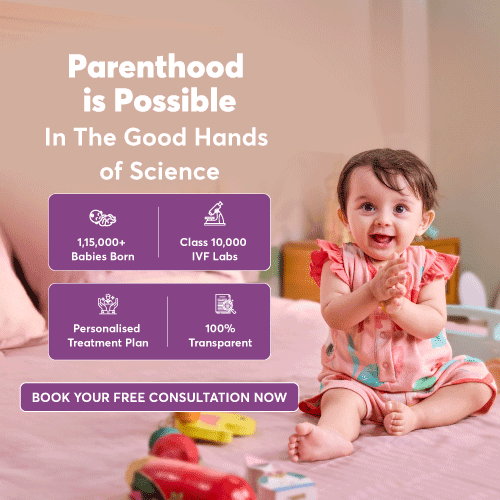
115,000+
Babies Born

Trusted by
Gynecs

Clinical
Excellence

Personalised
Treatments

Comprehensive
Care

Ethical &
Transparent
What Is IVF Treatment & How Does It Work?
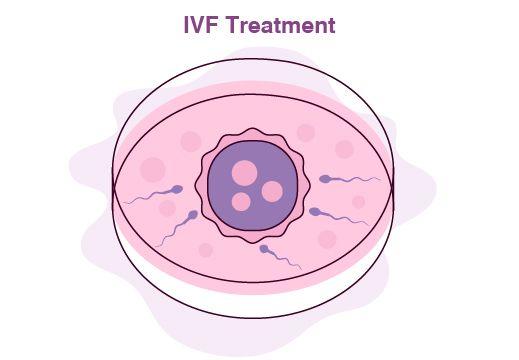
IVF is an assisted reproductive method often recommended to couples dealing with fertility issues, including blocked fallopian tubes in the woman, male infertility, or other unexplained infertility concerns for at least over a year. The treatment is a careful execution of a series of steps, which involves retrieval of matured eggs from a female, collection of sperm from a male, fertilisation of eggs and sperm in a lab, and finally, placing the fertilised embryo carefully into woman’s uterus where the foetus will develop and grow into a baby. One complete cycle of this procedure can take up to 3 to 4 weeks or even longer, where the steps are split across various intervals. Pregnancy through IVF is achievable using a couple's eggs and sperm or a donor’s eggs and/or sperm. In case a female, due to any reason, cannot have the embryo placed in her uterus, they can opt for a gestational carrier in whom they can implant the embryo.
Who will benefit from IVF Treatment?
IVF treatment is a solution for couples who are unable to achieve pregnancy due to known or unknown fertility issues. Fertility specialists study every couple’s unique challenges to identify the cause of their infertility. For couples over 40, IVF treatment is usually the first line of treatment they recommend. For those under 35, they may suggest other treatment options that involve fewer or no procedures, like fertility drugs that enable the ovaries to produce more eggs.
Infertility Challenges We Address With IVF

Blocked Or Damaged Fallopian Tube

Ovulation Challenges
Endometriosis
Uterine Fibroids
Previous Surgery To Avoid Pregnancy
Problem with sperm count
Unexplained Infertility
A Genetic Disorder
A desire to preserve fertility due to cancer or other health conditions
Fallopian tubes in a woman’s body transfer eggs from the ovaries to the uterus. These tubes can get blocked or damaged for several reasons, including past tubal surgeries. This does not allow the sperm to fertilise the egg or prevent the embryo from travelling to the uterus.
Step By Step IVF Treatment Process
Here is a step-by-step process of an IVF treatment
Pre-Care
Treatment
Post-Care
Birth Control Pills
As part of the initial process, the fertility specialist often recommends birth control pills or estrogen to prevent the formation of ovarian cysts and control the timing of the menstrual cycle. This process helps align the growth of follicles to achieve a good number of mature eggs.
Ovarian Stimulation
The next step of the procedure involves stimulation of the ovaries to encourage a group of eggs to mature simultaneously and fully, unlike naturally, where only one egg becomes mature enough to ovulate.The steps involved here are:
A. Injectable hormone medication:
Injecting stimulating hormones after assessing the type, dosage and frequency of medication based on the individual’s medical history, age, and AMH.
B. Monitoring:
Assessing the ovaries’ response to the medications through serial transvaginal ultrasounds and monitoring blood hormone levels.
C. Trigger shot:
After the eggs are ready for final maturation as determined by ultrasound and hormone levels in the above step, the specialist gives a “trigger shot” to finalise the maturation of eggs in preparation for egg retrieval.
What Is The Success Rate Of IVF Treatment In India?
The success rate of IVF treatment is 35 to 40%. It depends on factors such as maternal age, the couple’s medical complexities, previous history, and lifestyle choices. It is best to consult a fertility specialist who will assess if any factors apply to you and how they may affect your chances of a successful pregnancy.
What Are The Benefits Of IVF Treatment?
The treatment offers the following benefits:
Hope for parenthood
IVF is an advanced treatment that provides a ray of hope to couples struggling to achieve pregnancy for years.
Boosts the chances conception and having a healthy baby
IVF significantly improves the chance of conception. The procedure minimises the risk of passing any genetic disorder or chromosomal abnormalities to the baby as the procedure involves transferring the healthiest embryos into a woman’s body.
Open to everyone (single parents and same-sex couples)
The procedure is viable for couples who may not otherwise experience parenthood, including same-sex couples, couples who are unable to conceive, and singles can opt for the treatment through donor sperm/egg, surrogacy, and assisted fertilisation.
Preservation of embryos and eggs
The treatment allows the option to freeze embryos for future use. Anyone who wants to delay pregnancy and reduce the risk of complications in future can have their embryos frozen. Women can also freeze their eggs for future use.
Allows using donor sperm or eggs
The procedure allows opting for donor eggs or sperm. Therefore, it is beneficial for couples if one of them has fertility problems arising due to low egg reserve or absence of eggs or sperm.
Patient Stories
Start your parenthood journey Today
Thank you for reaching out to us. Our execuitve will get back to you shortly.
FAQs on IVF Treatment
The effectiveness or success rate of the treatment may depend on several factors, including maternal age, medical complexities, or response to previous treatment (if applicable).
Typically, a fresh embryo transfer takes about three to four weeks to carry out several steps of the IVF procedure. A frozen embryo transfer takes 6-8 weeks. Once successful, pregnancy can be confirmed about 14 days later.
Doctors recommend that couples wait for a minimum of 4-6 weeks after a failed IVF procedure.
No, you cannot select the gender of a baby during IVF in India.
It is best to get the treatment under 35 years of maternal age.
No, the treatment is not painful. Some parts of the process, such as egg retrieval and embryo transfer are a little uncomfortable to experience.
Most women often do not feel any discomfort post-procedure and comfortably continue with day-to-day activities. After a successful IVF treatment, you may experience a symptoms like minor bloating, cramping, breast tenderness, spotting or constipation. These symptoms are normal.
Yes. As part of the IVF procedure, the fertility specialist will administer certain injectable hormone medications to encourage the eggs (the entire group of that menstrual cycle) to fully mature simultaneously. The specialist administers these fertility boosters or injectable hormones for around eight to 14 days.
Any woman below 50 years dealing with known or unexplained fertility issues is eligible for that treatment.
The treatment is not recommended for women above 50 years and those who have critical health conditions or poor lifestyle choices.
During the ovulation stimulation phase of IVF treatment, some women may experience minor side effects such as nausea, vomiting, hot flashes, headaches, abdominal pain, and ovarian enlargement. Bruising or mild discomfort at the site of IVF injections is also common. After the embryo transfer procedure, it is normal to experience symptoms like bloating, cramping, spotting, breast tenderness, and constipation. These side effects are generally mild, but if they persist, you must consult your fertility specialist immediately.
Great news — your first IVF consultation is completely free! Meet our specialists, share your concerns, and discover the best treatment path for you, all at zero cost.
Absolutely! We provide easy EMI and flexible financing plans to make IVF treatment financially manageable. Our counselling team will design a payment plan that fits your budget, ensuring cost is never a hurdle on your path to parenthood.

Treatment Videos

Client Reviews

Cities with Oasis


Blogs on Fertility Treatments, Reproductive Health & More


Thank you for reaching out to us. Our execuitve will get back to you shortly.