


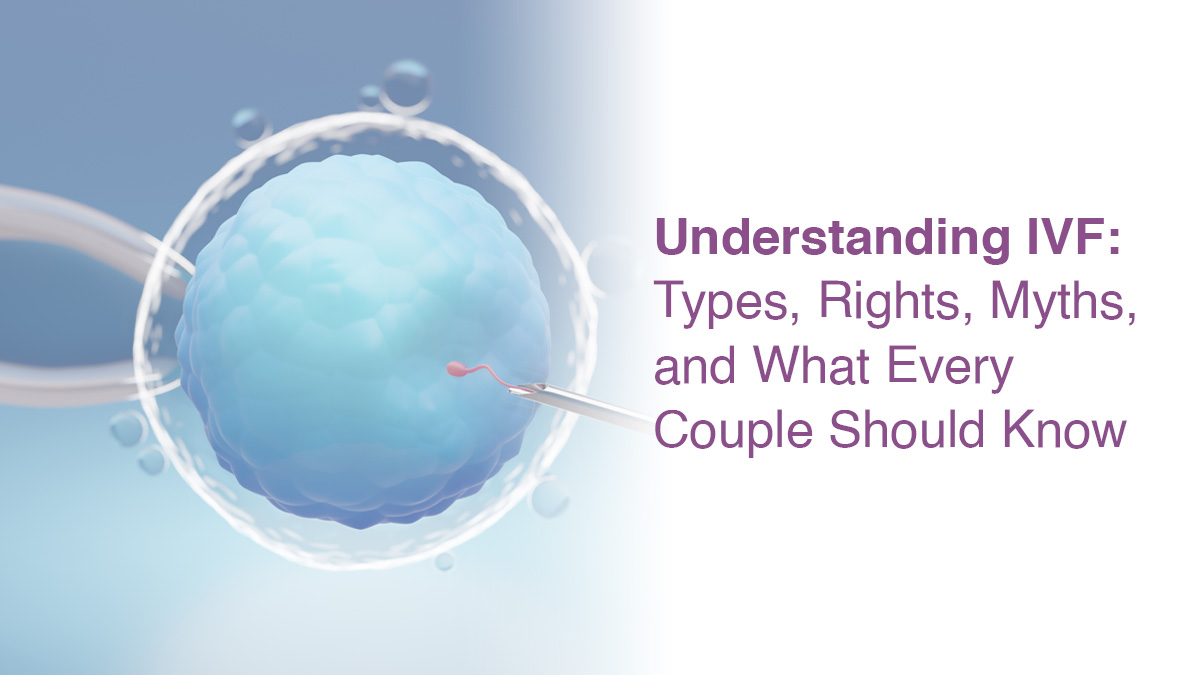
Bringing a child into the world is a dream for many couples. But when natural conception doesn’t work out, medical science offers a ray of hope through in vitro fertilization or IVF. While IVF has helped millions of couples become parents, it’s still surrounded by confusion, myths, and a lack of awareness.
This guide breaks down the basics of how IVF works, the different IVF types, your legal rights, common misconceptions, and what to expect before starting your journey.
What is IVF?
In vitro fertilization is a fertility treatment where an egg and sperm are combined outside the body, in a lab. After the embryo has developed, it will be placed into the woman’s uterus in an attempt to achieve pregnancy. IVF may be recommended for couples who have experienced one of the following: blocked fallopian tubes, males with a low sperm count, unexplained infertility, or unsuccessful attempts with other methods of fertility treatments.
To understand how IVF works, think of it in these steps:
- Hormonal injections help the ovaries produce more number of eggs.
- Eggs are collected and fertilised with sperm in a lab.
- The resulting embryos are observed, and one or more are selected for transfer.
- The selected embryo is placed in the uterus for implantation.
Different Types of IVF Treatments in India
Thanks to medical advancements, there’s no one-size-fits-all approach to IVF. Doctors suggest different IVF procedures based on each couple’s condition. Here are the most common IVF types in India:
1. Standard IVF (Conventional IVF)
This is the most widely used method. Multiple eggs are retrieved after hormone stimulation and fertilized with sperm in a lab.
2. IVF with ICSI (Intracytoplasmic Sperm Injection)
Here, a single healthy sperm is directly injected into an egg. This method is preferred for male infertility issues like low sperm count or poor sperm mobility.
3. IVF with Donor Eggs
If a woman’s egg quality is poor or if she’s unable to produce eggs, donor eggs can be used. These are fertilized with the partner’s sperm and transferred to the woman’s uterus.
4. IVF with Donor Sperm
This is used when the male partner’s sperm is not viable or is absent. Donor sperm is used to fertilize the woman’s eggs.
5. Natural Cycle IVF
In this method, no fertility drugs are used. The process follows the woman’s natural cycle and retrieves the single egg released during ovulation.
6. Mini or Mild Stimulation IVF (Mini-IVF)
Fewer drugs are used in this process to gently stimulate the ovaries. It’s ideal for women who don’t respond well to standard stimulation.
7. Frozen Embryo Transfer (FET)
Embryos created in an earlier cycle are frozen and later thawed for transfer. This allows flexibility in timing and often increases IVF success rates.
Legal Rights Every Couple Should Know Before IVF
Before you begin treatment, it’s important to understand your rights. According to ART guidelines in India, every couple undergoing IVF procedures has the right to:
1. Right to Consent for All Treatments
No treatment can be started without the full and informed consent of both partners.
2. Right to Know About the Complete Treatment Cycle
Couples should be informed about every step involved in their IVF consultation and treatment process.
3. Right to Information on Potential Risks & Complications
Doctors must explain the risks, such as IVF side effects, success chances, or possibilities of multiple pregnancies.
4. Right to Information About Alternative Treatments
Patients should be made aware of all available treatment options, including adoption or surrogacy.
5. Right to Access Reports & Treatment Summary
Couples have the right to ask for and receive complete documentation of their IVF procedures and medical records.
Common Myths About IVF – Busted
There are many myths that make IVF seem scary or unnatural. Let’s clear some of them:
Myth 1: IVF always results in twins or triplets.
Fact: While there’s a chance, modern IVF aims for single embryo transfer to reduce multiple births.
Myth 2: IVF babies are not “normal”.
Fact: IVF babies are as healthy and normal as naturally conceived babies.
Myth 3: IVF guarantees success.
Fact: Unfortunately, no fertility treatment can promise results. IVF success rates depend on age, health, and other factors of the couple.
Myth 4: IVF is only for older women.
Fact: Women in their 20s and 30s may also need IVF due to various fertility issues.
What to Know Before Starting IVF?
Starting IVF can feel overwhelming, but being prepared helps ease the journey. Here’s what every couple should keep in mind:
- Start with a thorough IVF consultation. Ask questions and understand your options.
- Learn about possible IVF side effects, such as bloating, mood swings, or discomfort from hormone injections.
- Take care of your physical and emotional health. IVF can be emotionally taxing, so support each other.
- Be financially prepared, as IVF may require multiple cycles.
- Patience is key. Success doesn’t always come in the first attempt.
Conclusion
In vitro fertilisation has made it possible for many couples to fulfil their dream of parenthood. Understanding the various IVF types, knowing your rights, busting myths, and getting a clear idea of how IVF works can make this journey smoother. If you wish to know more, visit the Oasis Fertility Clinic near you to comprehend more from the reputed fertility specialists. You can also call us at 1800-3001-1000 or use our live chat option for prompt assistance.
FAQs
Is IVF treatment painful?
The process is not very painful, but some women may feel mild discomfort during egg retrieval or after hormone injections.
How many cycles of IVF are usually needed?
It varies from person to person. Some may get pregnant in the first cycle, while others might need two or more attempts.
Are there any side effects of IVF treatment?
IVF side effects are mild which can include bloating, mood changes, headaches, or mild abdominal pain due to hormonal medicines.