



IVF
The best egg and sperm are fertilized with advanced techniques for a couple to have a healthy baby...
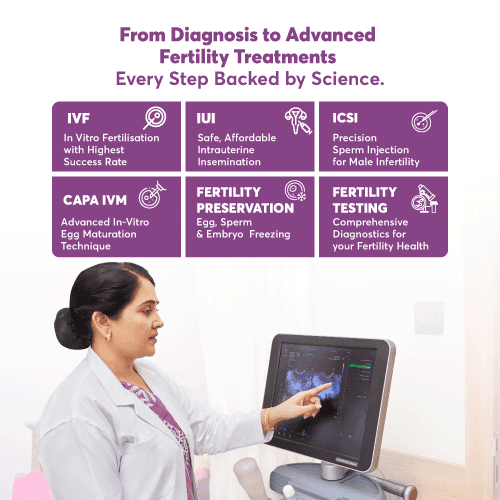
IVF (In Vitro Fertilisation) is a five-stage fertility treatment where eggs are retrieved from the ovaries, fertilised with sperm in a laboratory, developed into embryos, and transferred into the uterus. A complete IVF cycle typically takes 2–3 weeks.
The five steps are:
One complete IVF cycle takes approximately 2 to 3 weeks from the start of ovarian stimulation to embryo transfer. The total duration may vary slightly based on how the body responds to stimulation medications, the number of eggs retrieved, and whether a fr esh or frozen embryo transfer is planned.
A frozen embryo transfer (FET) is a procedure in which a previously frozen embryo from an earlier IVF cycle is thawed and transferred into the uterus. FET is recommended when a fresh transfer is not possible due to ovarian hyperstimulation risk, hormonal i mbalance, or when surplus embryos from a prior cycle are used in a subsequent attempt.
FET cycles are often gentler on the body than a fresh IVF cycle and are associated with comparable or higher success rates in many patients.
The two -week wait (2WW) is the period between an embryo transfer and the pregnancy test. During this time, the embryo attempts to implant into the uterine lining. Some women experience mild symptoms such as light spotting, bloating, or breast tenderness, these are not reliable indicators of success or failure.
It is important to continue prescribed medications, avoid strenuous activity, and follow your fertility specialist's instructions. A blood beta -hCG test after 14 days is the most reliable way to confirm pregnancy.
Most couples conceive within 1 to 3 IVF cycles, with success rates improving with each attempt. Around 30% to 45% of patients may achieve pregnancy during the first IVF cycle, while others may require two or three cycles. By the third IVF attempt, cumulati ve success rates can increase to 65% to 80% in many cases.
Women under 35 generally have higher IVF success rates per cycle, whereas women over 40 may require additional cycles to improve their chances of pregnancy.
However, the number of cycles needed depends on age, ovarian reserve, embryo quality, and the underlying cause of infertility. Your fertility specialist will review your response after each cycle and adjust the protocol accordingly.
IVF success rates in India mainly depend on a woman’s age, egg quality, overall reproductive health, and the fertility clinic’s expertise. In general, younger women tend to have higher IVF success rates per cycle.
Women under 35 typically have an average IVF success rate of around 40% –55% per cycle. Success rates gradually decline with age, especially after 40, due to reduced egg quality and ovarian reserve.
Average IVF Success Rates in India by Age:
| Age Group | Average IVF Success Rate per Cycle |
|---|---|
| Under 35 Years | Around 52% |
| 35–37 Years | Around 30% –40% |
| 38–40 Years | Around 20% –30% |
| 40 Years | Around 20% |
| 41 Years | Around 15% |
| 42 Years | Around 12% |
| 43+ Years | Around 8% –10% |
IVF success rates can also improve with multiple treatment cycles, personalized fertility treatment plans, advanced IVF technologies, and healthy lifestyle changes.
For women over 40 using their own eggs, IVF success rates are typically 10 –15% per cycle, due to the natural decline in egg quality and ovarian reserve with age. However, IVF with donor eggs can significantly improve outcomes, with success rates rising to 50 –60% per cycle even for women in their 40s.
Early consultation with a fertility specialist is strongly recommended for women over 38, as timely evaluation and treatment planning can meaningfully improve chances of success.
IVF is most successful for women in their early 30s. At this stage, egg quality and quantity are at their highest, reducing the risk of chromosomal abnormalities and improving the likelihood of a successful embryo implantation.
Success rates begin to decline gradually after age 35 and more significantly after 38. That said, many women in their late 30s and early 40s achieve successful pregnancies through IVF with appropriate medical support.
No, 37 is not too late for IVF. Many women in their late 30s successfully conceive through IVF treatment. While fertility and egg quality do decline with age, a thorough fertility assessment , including AMH testing and antral follicle count , can identify the most appropriate treatment approach for each individual.
For women above 38 whose ovarian reserve is low, donor egg IVF may be discussed as an option to significantly improve success chances.
IVF success is influenced by several key factors:
Fill Up The Form To Get a
Avail 0% interest on EMI
All Procedures | No Upper Limit
Fill Up The Form To Get a
Avail 0% interest on EMI
All Procedures | No Upper Limit


