


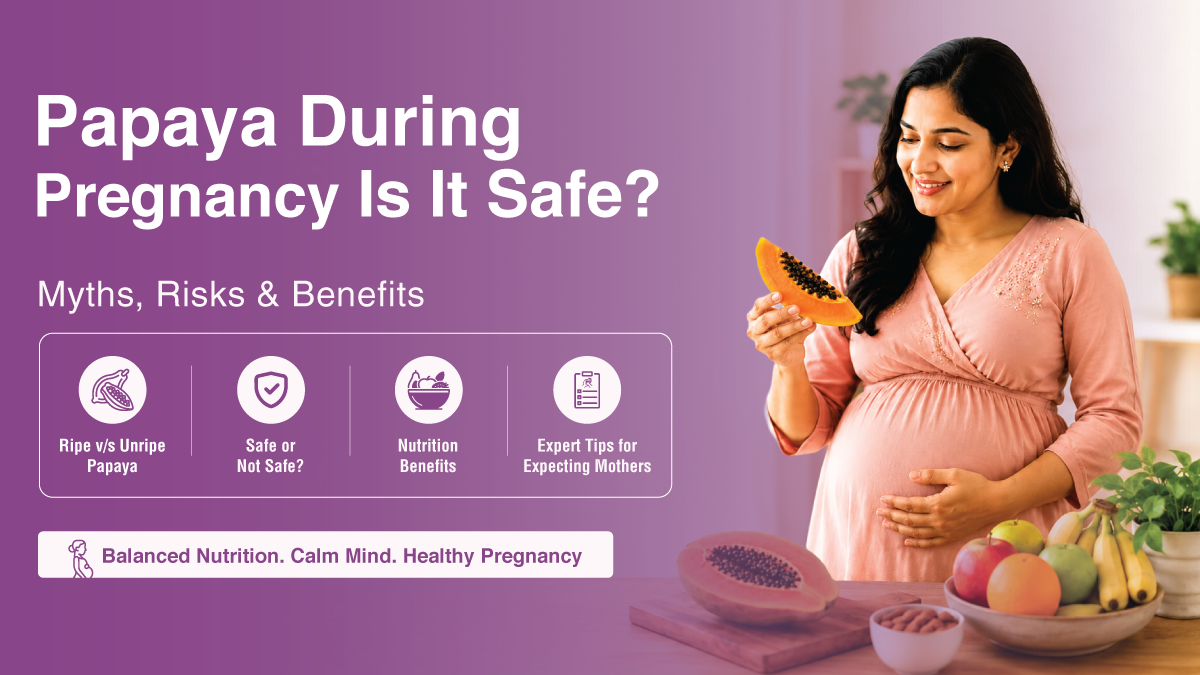
Dietary restrictions during pregnancy can be overwhelming and confusing. Several fruits are suggested when you are pregnant, and papaya is one of the most debated fruits in maternal nutrition.
Concerns surrounding papaya in pregnancy are related to unripe papaya and its latex content, and not the fully ripe fruit itself.
Nutritional Value of Papaya During Pregnancy
Papaya has several nutrients that support general health during pregnancy. Fully ripe papaya provides vitamin C, potassium, fibre, and antioxidants that are good for your digestion and immune function. It also contains folate, which plays a role in foetal development. The fruit has high water content and natural fibre, which reduces constipation during pregnancy.
Papaya In Pregnancy
The primary concern surrounding papaya in pregnancy relates to unripe or semi-ripe papaya. Green papaya has latex and papain, substances linked with uterine stimulation in laboratory and animal studies.
These ingredients are not present in ripe papaya. As the fruit ripens, latex concentration reduces significantly. Most clinical discussions around papaya fruit and pregnancy focus on avoiding raw or partially ripe papaya due to the theoretical risk of uterine contractions.
Why are unripe papayas concerning?
Unripe papayas are chemically different from ripe papayas. Its higher latex concentration creates concerns during pregnancy, mainly in the first trimester.
Latex Content
Papaya latex is a milky substance present in unripe papaya. This latex contains papain, an enzyme that breaks down proteins. Laboratory studies suggest papain exposure may stimulate uterine contractions when consumed in large amounts.
Unripe papaya contains much higher latex levels compared to fully ripe fruit. This is why doctors usually advise avoiding green papaya during pregnancy.
First Trimester Risks
The first trimester is a sensitive stage of pregnancy. Implantation and early foetal organ development occur during these weeks. Even mild uterine stimulation is concerning during this period.
Human evidence linking papaya directly to miscarriage is limited. Still, due to the theoretical risk associated with papaya latex, most doctors recommend caution with unripe papaya during early pregnancy.
Is Ripe Papaya Safe During Pregnancy?
Fully ripe papaya has significantly lower latex levels. The fruit turns yellow-orange as it ripens, and papain concentration decreases considerably.
For many low-risk pregnancies, small portions of ripe papaya are considered safer when approved by a doctor. Still, recommendations vary depending on previous miscarriage history, high-risk pregnancy status, and underlying medical conditions.
Women with a history of preterm labour or recurrent pregnancy loss are advised to avoid papaya entirely for added caution.
Common Myths About Papaya and Pregnancy
Cultural beliefs and traditional dietary advice have contributed to several misconceptions about papaya for pregnant women. Let’s bust a few of them:
Myth: All Papaya Causes Miscarriage
The concern mainly applies to unripe papaya and latex-rich forms of the fruit. Fully ripe papaya contains much lower latex content and is considered lower risk in small quantities.
Myth: Small Amounts Always Harm Pregnancy
A small accidental intake of ripe papaya does not lead to pregnancy complications. Risk depends on the quantity consumed, ripeness of the fruit, and individual pregnancy factors.
Myth: Papaya Must Be Completely Avoided
Some women with low-risk pregnancies consume ripe papaya in small portions after medical approval. Complete restriction is usually focused on unripe papaya, papaya seeds, and papaya latex products.
What Happens If You Accidentally Eat Papaya During Pregnancy?
Accidentally consuming papaya during pregnancy does not mean immediate harm will occur. The first step is to stay calm and avoid panic.
You should monitor for symptoms such as:
· Abdominal cramping
· Spotting or bleeding
· Pelvic discomfort
· Unusual contractions
If symptoms develop, contact your obstetrician for evaluation. Small accidental consumption of ripe papaya is less concerning compared to eating unripe papaya in larger amounts.
Safe Fruits to Include During Pregnancy
Several fruits provide nutritional benefits during pregnancy without the concerns associated with unripe papaya.
Bananas
Bananas have potassium and fibre that support digestion and help regulate blood pressure. They also provide quick energy during pregnancy fatigue.
Apples
Apples contain antioxidants and fibre that are good for your digestive health. They are easy to include in regular meals and snacks.
Mangoes
Mangoes provide vitamin C, folate, and antioxidants that support foetal development and immune health.
Berries
Berries such as strawberries and blueberries contain antioxidants and vitamins.
Oranges
Oranges improve vitamin C intake and hydration. Vitamin C also supports iron absorption during pregnancy.
Papaya and Fertility Treatments
Women who are undergoing IUI or IVF treatment are generally advised to follow cautious dietary practices during treatment cycles. During embryo implantation, the uterine environment needs stability for successful attachment.
As unripe papaya has compounds associated with uterine stimulation, many fertility specialists advise avoiding it during fertility treatment. Discussions around papaya for pregnant women undergoing assisted reproductive treatment must always involve the fertility specialist managing the cycle.
Final Thoughts
There are several fruits and vegetables that can be harmful during pregnancy. However, a lot of them are myths, and women often don’t know the whole truth behind it. Hence, dietary decisions during pregnancy should always consider individual medical history and obstetric guidance.
If you have concerns related to pregnancy nutrition or fertility treatment, consult the specialists at Oasis Fertility for personalised guidance. You can call 1800-3001-1000 or connect through the live chat consultation support for further assistance.