


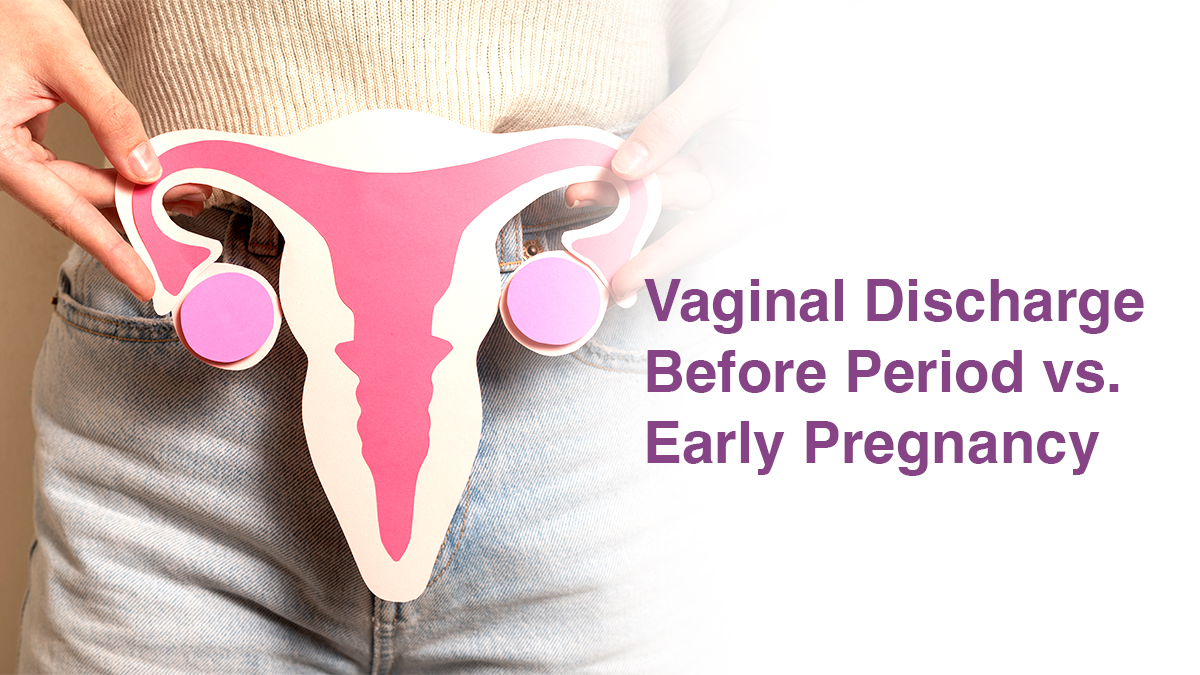
You’ve noticed a change in your vaginal discharge. Now you’re wondering about its meaning. Is this a sign your period is coming, or could you be pregnant? It’s a question many women in India ask themselves, especially when trying to conceive or monitoring their reproductive health.
Understanding the subtle differences between discharge before your period and early pregnancy discharge can help you interpret what your body is telling you.
Before we compare these signs, it’s important to understand what normal discharge looks like. You can read our detailed guide on Understanding Vaginal Discharge to learn about normal colours, textures, and causes.
Vaginal discharge is a normal, healthy part of your reproductive system. The characteristics of this discharge change throughout your menstrual cycle and can vary during early pregnancy.
Let’s explore these differences so you can better understand your body’s signals and make informed decisions about when to take a pregnancy test or consult your doctor.
Understanding Normal Vaginal Discharge
Before we compare discharge patterns, it is essential to understand what normal vaginal discharge is. Your vagina naturally produces discharge to keep itself clean. This fluid contains cells from your cervix, along with bacteria that maintain your vaginal pH balance.
Normal discharge varies in amount, colour, and consistency throughout your menstrual cycle. These changes are driven by fluctuations in the hormone levels of estrogen and progesterone. Healthy discharge is clear or white, has a mild odour or no odour, and doesn’t cause itching or irritation.
The Hormonal Role in Vaginal Discharge
Your hormones orchestrate the changes in your vaginal discharge. Estrogen levels rise during the first half of your cycle, leading to increased discharge production.
After ovulation, progesterone becomes dominant, which results in thicker, more opaque discharge.
Understanding these hormonal cycles is key to recognising whether your discharge patterns suggest an approaching period or possible pregnancy.
Vaginal Discharge Patterns Before Your Period
In the days leading up to your period, you’ll notice particular patterns in your vaginal discharge. These changes occur as your body prepares for menstruation.
Common Colours and Textures Before Menstruation
White discharge before your period is extremely common. This discharge, often called leucorrhoea, tends to be thick and creamy in consistency. You might notice it becomes sticky or paste-like as your period approaches.
Some women might also experience watery discharge before their period, mostly in the days immediately following ovulation. This can gradually become thicker as menstruation draws nearer.
The amount of discharge often increases in the week before your period due to elevated progesterone levels. Occasionally, you might notice egg white discharge before your period, which is more common around ovulation. If you see this type of stretchy, transparent discharge just before your period, it’s nothing to worry about.
Is White Discharge Before Your Period Good or Bad?
White discharge before your period is neither good nor bad. It’s simply normal. This discharge helps protect your reproductive system from infections.
The absence of white discharge before your period doesn’t indicate a problem either. Some women naturally produce less noticeable discharge, and this variation is perfectly normal.
Vaginal Discharge in Early Pregnancy
When pregnancy occurs, your hormonal landscape shifts dramatically. These changes affect your vaginal discharge almost immediately, though you might not notice the differences right away.
The Hormonal Role in Early Pregnancy Discharge
After conception, your body begins producing human chorionic gonadotropin (hCG). It maintains elevated progesterone levels. These hormones increase blood flow to your pelvic area and stimulate your cervical glands to produce more mucus. This protective mechanism helps seal the cervical opening and safeguard your developing pregnancy from potential infections.
Early pregnancy discharge is white or milky in appearance. It has a mild smell. Many women notice an increase in the amount of discharge, which can be one of the earliest signs of pregnancy. Some women experience watery discharge as a sign of pregnancy, chiefly in the very early stages.
Can White Discharge Be a Sign of Pregnancy?
White discharge is sometimes an indication of early pregnancy. However, just having a white discharge does not guarantee that you are pregnant, as it often occurs prior to getting your period. The presence of other symptoms may assist you in determining if you may be pregnant or not.
Key Differences: Discharge Before Period vs Early Pregnancy
Now, let’s examine the precise differences that can help you distinguish between pre-menstrual discharge and early pregnancy discharge.
| Aspect | Discharge Before Period | Early Pregnancy Discharge |
| Texture | Thick, creamy, slightly sticky | Thinner, smoother, more fluid |
| Colour | White or off-white | Milky white, sometimes more noticeable |
| Smell | Mild or no smell | Mild or no smell |
| Odour Concern | Strong smell suggests infection | Strong smell suggests infection |
| Timing | Increases about a week before periods, then reduces just before menstruation | Gradually increases and continues through the first trimester |
| Pattern Change | Fluctuates with menstrual cycle | Stays consistent or increases without a period |
| Key Indicator | Followed by onset of periods | Increased discharge with missed period |
| Associated Symptoms | Breast tenderness, bloating, mood changes, mild cramps | Missed period, nausea, fatigue, frequent urination, breast changes |
| Spotting | Not typical before period (unless premenstrual spotting) | Implantation bleeding (light spotting 6–12 days after conception) |
| Cramping | Ends with menstruation | Mild cramping without bleeding |
When Discharge Is Normal vs When It’s a Concern
Understanding when your discharge falls within normal parameters and when it signals a potential problem is crucial for your reproductive health.
Normal Discharge Characteristics
Your discharge is likely normal if it’s transparent or white. It has a mild smell or no smell. It doesn’t cause itching or burning, and it varies in consistency throughout your cycle.
The amount can range from barely noticeable to enough to require a panty liner.
Warning Signs That Require Medical Attention
Consult your doctor if you notice these concerning changes:
- Green, yellow, or grey discharge
- Strong, foul, or fishy odour
- Cottage cheese-like texture
- Frothy or foamy consistency
- Itching, burning, or irritation
- Pain during intercourse or urination
- Heavy bleeding or clots
- Discharge accompanied by fever
When to Take a Pregnancy Test
For the most accurate results, take a pregnancy test on the first day of your missed period or later. Modern home pregnancy tests available in India can detect pregnancy as early as 10-14 days after conception.
Waiting until after your missed period reduces the chance of a false negative. If you’re experiencing increased discharge along with other potential pregnancy symptoms, it’s a good time to test.
Remember that no discharge before your period doesn’t mean you’re not pregnant. Some women simply produce less noticeable discharge.
When to Consult a Doctor?
Schedule an appointment with your gynaecologist if you experience abnormal discharge. Seek consultation if you suspect pregnancy. Visit your doctor if you have concerns about your reproductive health.
In India, many women find it helpful to consult with their doctor early in their pregnancy journey to ensure proper prenatal care from the beginning. Book your appointment today to address any questions about your discharge patterns or reproductive health.
Distinguishing between discharge before your period and early pregnancy discharge requires careful observation of texture, colour, timing, and accompanying symptoms.
Whilst white or watery discharge can occur in both scenarios, the persistence of increased discharge beyond your expected period date, combined with other pregnancy symptoms, suggests conception has occurred.
If you’d like deeper guidance, you can visit your nearestOasis Fertility Clinicto consult experienced fertility experts. You may also reach out by calling 1800-3001-1000 or connect instantly through the live chat service for prompt support and clarity.