






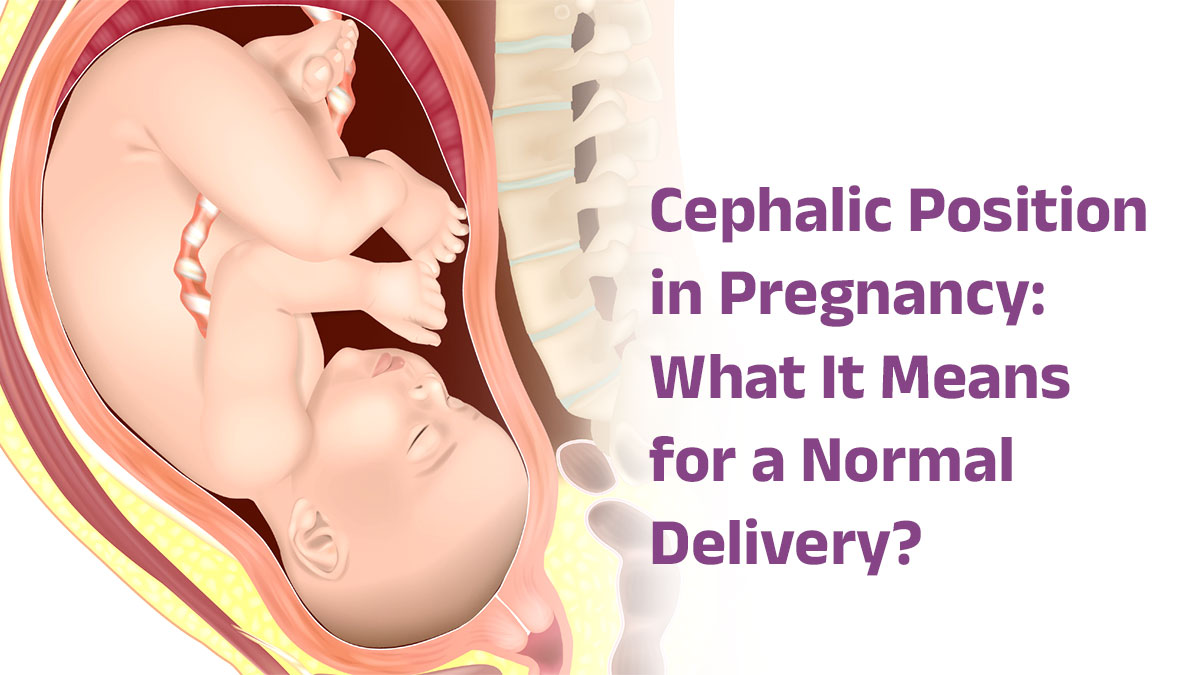
As your pregnancy moves closer to the due date, your baby’s position inside the uterus becomes significant for labour and delivery. One of the most favourable positions is the cephalic position, where the baby is placed head down toward the birth canal. In this position, the chin is tucked toward the chest that allows the smallest part of the head to lead through the pelvis.
This position supports a smoother vaginal birth and is considered the safest and most common position for normal delivery. Doctors closely observe foetal alignment during routine check-ups and ultrasound scans to understand how labour is likely to progress.
In this article, we will learn all about it and understand what things you have to take care of with regard to the baby’s position in different weeks and what to expect.
What Is the Cephalic Position?
In a cephalic position, the baby’s head is oriented downward toward the mother’s pelvis. In this alignment, the head enters the birth canal first during labour. This orientation is preferred because it supports the natural mechanics of vaginal delivery, and it is the most suitable position for childbirth.
From a doctor’s perspective, head-first positioning allows the baby’s head to apply steady pressure on the cervix, which supports gradual dilation and may be one of the signs labour is 24 to 48 hours away.
Compared to other foetal positions, cephalic presentation is considered safer, and doctors usually do not need to rely on assisted delivery procedu
Cephalic Presentation at Different Stages of Pregnancy
Foetal position is not the same throughout pregnancy. In the early months, the uterus has enough space for frequent movement, and the baby often changes its position.
As pregnancy advances, space within the uterus eventually reduces, and the baby begins to settle into a more stable position:
- Around 20 weeks: Position is noted during routine scans but has no relevance for delivery planning.
- Between 28 and 32 weeks: Many babies start turning head-down as movement becomes more limited.
- Between 34 and 36 weeks: A large proportion settle into cephalic presentation.
- After 37 weeks, most babies stay in this position until labour begins.
This transition explains why doctors focus more on foetal position in the final weeks rather than earlier stages.
As foetal position becomes important in later pregnancy, doctors begin structured monitoring closer to term. During routine prenatal visits, abdominal examination is used to assess the baby’s position. Between 32 and 36 weeks, these checks tell if the baby is moving toward a head-down position or not.
By 36 to 37 weeks, confirmation of cephalic position is analysed. Ultrasound scans are advised when physical examination findings are unclear or when the baby remains in a non-cephalic position in the final weeks.
Types of Cephalic Positions
The cephalic position includes several head-first variations. Each of them can influence labour in different ways:
- Vertex presentation: The baby’s chin is tucked toward the chest. This is the most favourable and commonly observed position for normal delivery.
- Occiput anterior position: The baby faces the mother’s back. This alignment is good for effective contractions and smoother pushing.
- Occiput posterior position: The baby faces the abdomen. Normal delivery is possible, but labour may progress more slowly.
- Brow or face presentations: Less common head-first positions that require closer monitoring due to altered head movement through the pelvis.
Your doctor thoroughly evaluates these variations when they are checking labour progression and delivery planning.
How to Encourage the Baby to Move into the Cephalic Position?
Most babies move into a head-down position naturally. When a baby stays in a different position during late pregnancy, doctors suggest supportive measures after reviewing maternal and foetal health.
These approaches focus on posture and movement:
- Have an upright position during daily activities
- Gentle walking for better pelvic mobility
- Doctor-approved prenatal stretches or exercises
These activities affect the foetal position, so make sure to consult your doctor first.
What Happens if the Baby Does Not Turn?
If the baby remains in a non-cephalic position close to term, your doctor will discuss appropriate next steps based on your medical history, the child’s well-being, and other safety considerations.
Possible options include:
- External cephalic version: A supervised procedure where trained doctors apply pressure on the abdomen to guide the baby into a head-down position.
- Planned caesarean delivery: It is recommended when turning is not successful or vaginal delivery is risky.
When to Consult Your Doctor About Foetal Position?
You should discuss foetal position during routine third-trimester appointments. Contact your doctor if you notice sudden changes in movement patterns or feel uncertain about your baby’s alignment. Clear communication at this stage is a must, as it will give you and your family enough time to think about alternative approaches or try to get the baby in cephalic position.
If everyone is aware of the cephalic position, it helps the doctors closely monitor foetal alignment as your due date approaches. A head-down position is good for a safe and normal vaginal delivery. So make sure to ask questions about the cephalic position when you are close to the delivery date.
If you need guidance on pregnancy monitoring or delivery planning, the IVF specialists at Oasis Fertility provide personalised care and clinical support. You can reach the team at 1800-3001-1000 or connect through live chat on the Oasis Fertility website to discuss your next steps.


fill up the form to get a
Free Consultation
Avail 0% interest on EMI
All Procedures | No Upper Limit
Frequently Asked Questions
Where do you feel kicks if a baby is cephalic?
How many weeks is the cephalic position?
Can a baby change position after a cephalic position?
Related posts