





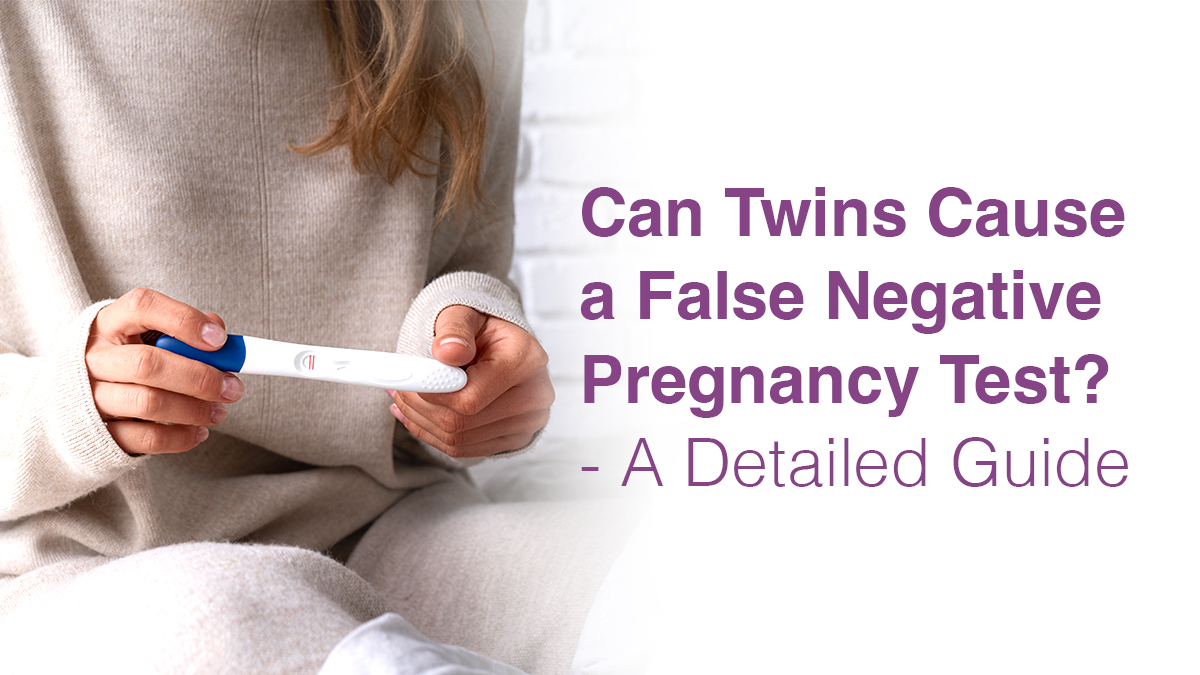
You suspect pregnancy, yet the home test shows a negative result. This situation creates confusion, as a false negative pregnancy test mean that the report says you are not pregnant when conception has already happened. Testing too early after implantation is one common reason.
Diluted urine from high fluid intake can alter hormone concentration. An expired kit or incorrect usage also affects accuracy. In some cases, twin pregnancies present different hormonal patterns in the early days, which adds another layer to the interpretation of results.
Many women have this question among others is: Can twins cause a false negative pregnancy test? In this article, we will learn all about twin pregnancies and whether they can cause false tests.
How Pregnancy Tests Work and Why False Negatives Happen?
Pregnancy tests detect the hormone human chorionic gonadotropin, which is commonly known as hCG. This hormone is released after the fertilised egg implants into the uterus. Urine pregnancy tests rely on a minimum threshold of hCG to trigger a positive result.
False negatives happen when this threshold is not met or when testing conditions interfere with detection.
Common testing drawbacks include:
- Testing too early, before adequate hCG production
- Diluted urine due to high fluid intake
- Improper test usage or expired kits
- Variations in individual hormone release patterns
In twin pregnancies, hCG behaviour is very different, and that’s why tests can be inconsistent.
Can Twins Cause a False Negative Pregnancy Test?
This question will always have an answer with clinical backing. Twin pregnancies involve higher and faster rising hCG levels, yet this does not always mean that early results will be positive.
Immediate Test
Testing within the first two weeks after conception produces unreliable results, even in twin pregnancies.
Possible reasons can be:
- Implantation timing differences between embryos
- hCG levels are still below the detection range
- Hormonal fluctuations during early placental development
At this stage, a negative result does not rule out a single or twin pregnancy.
Test After 4 Weeks
After four weeks, most pregnancies show detectable hCG levels. In twin pregnancies, testing around this time creates a different issue.
What happens is that tests can show:
- Extremely high hCG levels overwhelm test antibodies
- Inconsistent results across different test brands
- Negative urine tests despite pregnancy progression
This phenomenon links directly to a mechanism known as the hook effect.
What is the Hook Effect in Twin Pregnancies?
The hook effect happens when hCG levels rise beyond the optimal detection range of a urine pregnancy test. Instead of producing a strong positive line, excessive hormone concentration disrupts the antibody binding process.
In twin pregnancies, this situation happens more frequently due to:
- Faster hCG multiplication
- Higher hormone concentration earlier in gestation
- Limited detection range of standard urine kits
As a result, the test fails to register hCG accurately, and the outcome is a false negative. Hence, it is always advised to get a blood test done to confirm the pregnancy.
Early Pregnancy Symptoms That May Appear Despite a Negative Test
In twin pregnancies, symptoms tend to show earlier or with greater intensity. You might notice some of these symptoms:
- Rapid breast tenderness or enlargement
- Increased nausea or early vomiting
- Fatigue that feels disproportionate to daily activity
- Frequent urination
- Abdominal bloating or pelvic heaviness
These signs alone do not confirm twins, yet they signal hormonal activity that needs medical evaluation if tests stay negative.
Other Common Reasons for a False Negative Pregnancy Test
Many couples and women assume that the test came out to be negative because of twins, but that is not the case.
These include:
- Late ovulation delays implantation
- Testing with diluted urine samples
- Incorrect reading time interpretation
- Faulty or expired test kits
- Underlying hormonal conditions that affect hCG release
When you know about these factors, it helps you avoid unnecessary anxiety when results don’t correspond to your physical changes.
When a Growing Belly and a Negative Test Need Medical Attention?
A visible increase in abdominal size along with repeated negative pregnancy test results is a matter of concern. In early pregnancy, abdominal changes are usually stable, and noticeable enlargement suggests advancing gestation or another underlying cause.
When physical changes continue over several weeks without test confirmation, medical evaluation is necessary to identify the cause and rule out any non-pregnancy-related conditions. Consistent symptoms such as missed periods, abdominal fullness, and hormonal discomfort are a sign that there is something wrong with your body. Hence, you must consult with your doctor rather than relying on home testing.
When to Consult a Doctor for Accurate Pregnancy Confirmation?
Home pregnancy tests are good preliminary screening tools, but they do not provide definitive confirmation in all cases. When results are negative despite pregnancy symptoms or when testing is done beyond the expected detection window, consulting a doctor ensures an accurate diagnosis.
Medical confirmation tells the exact blood hCG levels, which measure hormone levels precisely. Along with this, an ultrasound imaging confirms the pregnancy location and the number of gestational sacs. This approach eliminates uncertainty linked to urine test limitations and provides clear clinical direction.
Key Takeaways
Unclear pregnancy test results can be due to biological timing- in reality, you are pregnant, but you don’t know about it. Twin pregnancies follow distinct hormonal patterns that complicate early detection through urine tests. Hence, it is sometimes one of the reasons why your pregnancy test comes back negative.
If symptoms progress or uncertainty continues, professional evaluation is essential. For personalised assessment and accurate confirmation, consult the specialists at Oasis Fertility. You can reach the team at 1800-3001-1000 or connect through live chat for guided next steps.


fill up the form to get a
Free Consultation
Avail 0% interest on EMI
All Procedures | No Upper Limit
Frequently Asked Questions
Do twins take longer to show on a pregnancy test?
What are the symptoms of twins in early pregnancy?
What can cause a false negative pregnancy test?
Does a blood test confirm twins more accurately?
Related posts