





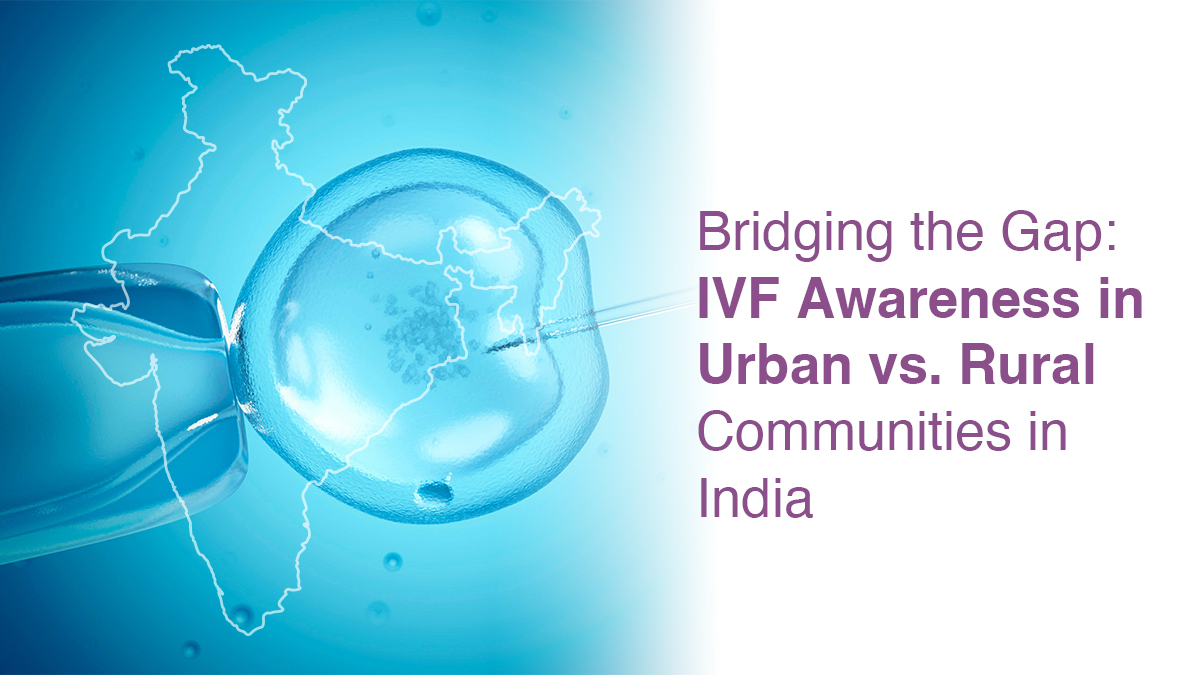
In India, infertility affects millions of couples, across regions, income groups, and social classes. However, when it comes to having access to fertility care, especially advanced fertility treatments like In Vitro Fertilization (IVF), a wide divide exists between urban and rural communities. As the urban India population is exposed to the different mediums of information, they are aware and have an acceptance towards IVF and other fertility treatments, whereas the rural areas continue to grapple with limited access, low awareness, and deeply rooted social stigma.
As World IVF Day 2025 approaches, bridging this gap is crucial for ensuring that every couple in India, regardless of their location, has a fair chance at parenthood.
Why Does IVF Awareness Differ Between Urban and Rural Areas?
In cities, particularly metro hubs and tier-1 towns, access to information is abundant. Fertility centers are already established, and people are continuously exposed to healthcare advertising through various platforms. This type of exposure contributes directly to greater recognition, awareness and understanding of IVF treatment.
Despite India witnessing substantial expansion in healthcare infrastructure, there are many people in smaller towns and rural areas, who still don’t know much about IVF, most of them only hear about it when a doctor comes to their area, or during any medical camps. They may search for it online later, but it’s hard to find easy-to-understand information that they can relate to.
Geography often dictates the first layer of limitations. Fertility services in India are largely located in metropolitan cities. For individuals in remote or rural villages, initiating a fertility journey can mean traveling to a distant city, managing accommodation, losing workdays and wages – all before treatment even begins.
The Influence of Cultural Norms and Social Taboo
Infertility, in many Indian regions irrespective of urban or rural populations, is still not openly discussed and is subject to social stigma and cultural myths. In many urban and rural communities, when it comes to facing difficulties in having children, people still follow traditional beliefs and tips rather than seeking medical help first. Still these norms don’t necessarily disappear in cities, but the presence of fertility clinics, easier access to medical advice and counselling lowers the barrier to seeking medical care.
In places where people don’t talk openly about fertility, initiating the conversation needs more than just facts and information. It takes compassion and utmost care.
Local Healthcare and Community Support in Rural Areas
In many rural communities, government doctors and midwives play a crucial role as they are the first people families turn to with questions about reproductive health, but most of them won’t have specific training in fertility care. This leaves a huge knowledge gap at the rural level. While urban fertility clinics often have trained counselors, rural areas could benefit from a structured training system for government doctors and midwives with short training programs, local outreach efforts, and support from urban medical institutions with accurate information about fertility.
Financial Constraints as a Reproductive Obstacle
IVF and similar other fertility procedures involve cost-intensive processes. In urban contexts, there is a rising awareness of financial instruments, fertility loans, and insurance-linked options. However, for low-income rural households, affordability remains a significant barrier along with accessibility.
Bridging this requires flexible financing options – tiered pricing, regional subsidies, or insurance collaborations that can align accessible fertility care with diverse economic realities.
Ways to Address the Divide in IVF Awareness
To ensure that every couple of India has a fair chance at parenthood and access to advanced fertility care, the urban-rural gap must be approached through sustained, collaborative strategies:
- Government Partnerships: More public-private partnerships can make IVF treatments accessible in rural PHCs or district hospitals.
- Mobile Clinics: Mobile IVF vans or traveling fertility experts can offer consultation and early screening in villages.
- Empowering local healthcare Workers: Training local healthcare workers with information in fertility treatments can transform them into trusted community advocates.
- Enhanced Healthcare Coverage: Expanding insurance coverage for fertility treatments and developing targeted support programs can ensure that economic circumstances don’t determine access to parenthood dreams.
- Community Support Groups: Creating safe spaces for women and couples to share their experiences can help reduce social stigma and build supportive networks.
With such efforts, India can gradually level the landscape of IVF access and awareness.
Pushing for Change – One Step at a Time
Infertility is a clinical condition, not a reflection of worth. While cities have pioneered a shift in perception and access to IVF, rural interest is growing steadily. This presents a compelling case for expanding outreach models.
Oasis Fertility is actively working to change this narrative by enhancing IVF awareness, expanding its presence to more towns and smaller cities, and offering expert consultations with a patient-first approach. If you want a consultation, you can call us at 1800-3001-1000 or use our live chat option for immediate assistance.
As we celebrate World IVF Day 2025, let’s commit to creating a future where fertility care reaches every corner of the country, be it urban or rural.


fill up the form to get a
Free Consultation
Avail 0% interest on EMI
All Procedures | No Upper Limit
Related posts